
 Save to Pinterest
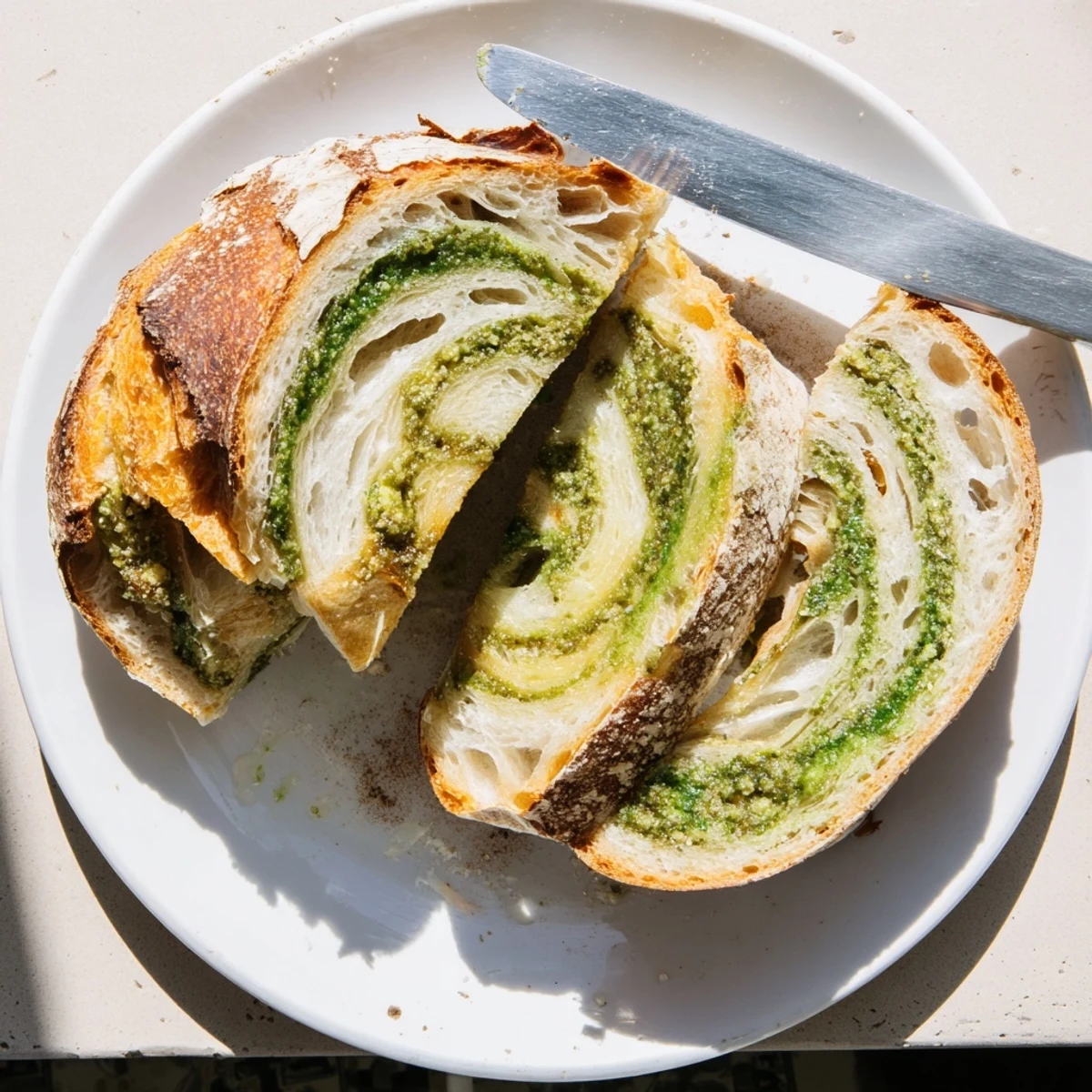
 This artisan sourdough combines traditional bread-making techniques with vibrant Italian flavors. The dough undergoes a 5-8 hour fermentation process, developing complex tangy notes and an open crumb structure. Fresh basil pesto creates beautiful green swirls throughout the loaf, while generous Parmesan topping forms a savory golden crust during baking.
The result is a versatile bread that elevates everything from morning toast to gourmet sandwiches. The extended rising time yields the characteristic chewy texture and deep flavor profile of authentic sourdough, while the pesto adds moisture and aromatic herbal notes in every bite.
The first time I pulled this bread from the oven, my entire apartment smelled like an Italian herb garden. I had been experimenting with adding mix-ins to my sourdough for months, but something about the combination of fragrant basil pesto and salty Parmesan just clicked. My roommate wandered into the kitchen, drawn by the aroma, and we ended up eating half the loaf standing right there at the counter.
Last summer I made this for a small dinner party, and my friend Sarah, who claims she hates bread, went back for thirds. There is something magical about the way the Parmesan gets all crispy and golden on top while the pesto keeps the interior incredibly moist. Now it is the one bread recipe I get asked to make repeatedly.
Ingredients
- 500 g bread flour: High protein flour is essential here for structure since the pesto adds moisture
- 350 ml lukewarm water: I aim for bathwater temperature, around 80°F feels about right to the touch
- 100 g active sourdough starter: Your starter should be bubbly and have doubled within the last 4 to 6 hours
- 10 g fine sea salt: Do not reduce this since the pesto needs that salt balance to shine
- 70 g basil pesto: Homemade is lovely but a good quality store-bought version works perfectly
- 50 g freshly grated Parmesan cheese: Grate it yourself because pre-grated Parmesan does not melt the same way
- 1 tbsp olive oil: This helps the Parmesan adhere and creates that beautiful golden crust
Instructions
- Mix and rest the dough:
- Combine the flour and water in your large bowl until no dry flour remains. Cover the bowl and walk away for 30 to 45 minutes to let the flour hydrate fully.
- Incorporate starter and salt:
- Add the starter and salt to the dough, using your fingers to squeeze them through until everything is evenly distributed. The dough will start to develop some structure as you mix.
- Build strength through folds:
- Perform stretch-and-fold sets every 30 minutes for 2 hours, grabbing one edge of the dough and pulling it up and over the center. Rotate the bowl and repeat four times per set, keeping the dough covered between folds.
- Let the dough relax:
- After the final fold, cover the bowl and let the dough rest at room temperature for about 1 hour. You will notice it has become more extensible and smooth.
- Shape the filled loaf:
- Turn the dough onto a lightly floured surface and gently press it into a rectangle. Spread the pesto evenly, leaving a 2 cm border, then sprinkle 40 g of Parmesan on top. Roll from the short end into a tight log and shape into a round or oval.
- Final rise:
- Place your dough seam-side up in a floured banneton or cloth-lined bowl. Cover and let rise for 2 to 3 hours until slightly puffy, or refrigerate overnight for deeper flavor development.
- Prepare for baking:
- Preheat your oven to 450°F with your Dutch oven inside for at least 30 minutes. Turn the dough onto parchment, brush with olive oil, and sprinkle with the remaining Parmesan.
- Bake with steam:
- Carefully transfer the dough into the preheated Dutch oven, cover with the lid, and bake for 20 minutes. Remove the lid and continue baking for another 18 to 20 minutes until deep golden brown.
- Cool completely:
- Let the bread cool on a wire rack for at least an hour before slicing. Cutting into warm bread will steam the crumb and make it gummy.
 Save to Pinterest
 My mother-in-law asked for the recipe after trying it at our Sunday family dinner. She is been baking bread for forty years and said this was the most creative use of pesto she had ever encountered. That compliment meant more to me than any perfectly scored loaf could.
Choosing Your Pesto
I have made this with every kind of pesto imaginable. Traditional basil is classic and reliable, but sun-dried tomato pesto creates this beautiful red swirl throughout the crumb that looks stunning. Walnut pesto adds a lovely earthiness that pairs especially well with whole wheat flour. Just avoid pesto with too much oil or your dough might become difficult to handle.
Timing Your Bake
The overnight refrigerator option is worth planning ahead for. The cold fermentation allows the flavors to meld beautifully and makes the dough so much easier to score. I often mix the dough in the evening, do the stretch-and-folds while I am making dinner, then let it do its final rise in the fridge overnight. Fresh pesto sourdough for breakfast has become quite a weekend tradition.
Serving Suggestions
This bread makes the most incredible grilled cheese sandwiches imaginable. The pesto adds a layer of flavor that means you barely need anything else between the slices. It is also perfect for dipping in soups or serving alongside a simple green salad and olive oil.
- Try it toasted with a soft scrambled egg and some fresh tomatoes
- Use leftovers for croutons in a Caprese salad
- Wrap slices well and freeze for up to a month
 Save to Pinterest
 There is something deeply satisfying about cutting into that first slice and seeing the beautiful green spiral running through the crumb. Bread that looks this impressive should not be this easy to make.
Recipe FAQs
- → How long does the dough need to rise?
-
The total rising time ranges from 5-8 hours, including an initial 30-45 minute autolyse rest, 2 hours of stretch-and-fold intervals, 1 hour resting period, and 2-3 hours final proofing. You can also refrigerate overnight for deeper flavor development.
- → Can I use active dry yeast instead of sourdough starter?
-
Yes, substitute 7g instant yeast for the starter. Reduce rising times significantly—first rise to 1-2 hours and final proof to 45-60 minutes. The flavor will be less complex but still delicious with the pesto and Parmesan.
- → What other pesto varieties work well?
-
Sun-dried tomato pesto adds rich umami flavor and creates beautiful red swirls. Walnut or arugula pesto provides earthy, nutty notes. Spinach pesto yields milder green color. Each variation maintains the loaf's moisture while adding unique flavor profiles.
- → Why do I need a Dutch oven?
-
The Dutch oven creates a steam-filled environment that helps the bread rise properly and develop a crisp, crackly crust. The trapped moisture keeps the crust soft initially, allowing maximum oven spring, then hardens into a golden, crunchy exterior during the final baking phase.
- → How should I store this bread?
-
Wrap completely cooled bread in a clean kitchen towel or paper bag and store at room temperature for up to 2 days. For longer storage, slice and freeze in an airtight bag—toast individual slices directly from frozen. Avoid refrigerating as it accelerates staling.
- → Can I make this dairy-free?
-
Replace the Parmesan with nutritional yeast or vegan Parmesan alternative. Use dairy-free pesto or make your own without cheese. The bread will still have excellent flavor and texture, though the topping won't melt quite the same way.