
 Save to Pinterest
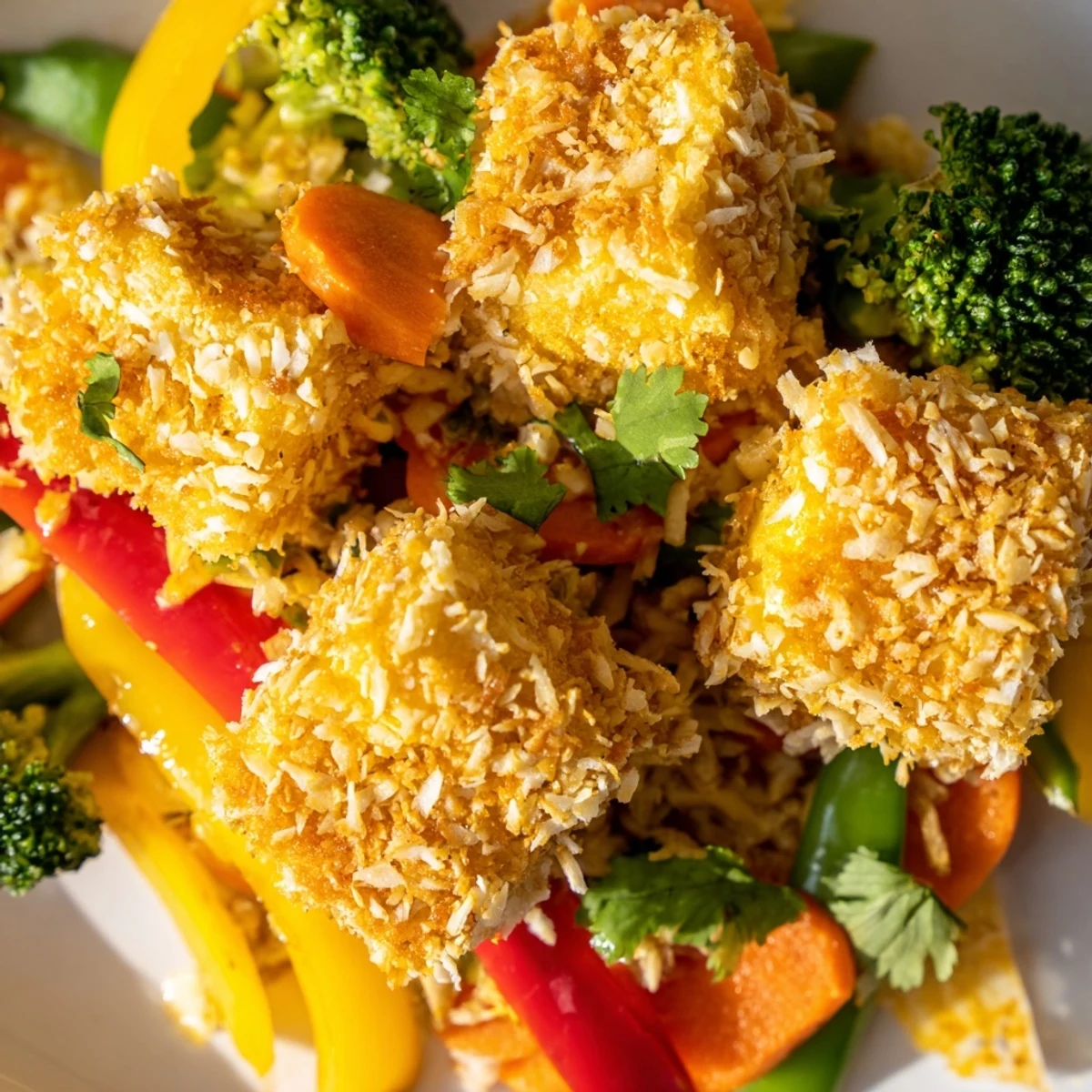
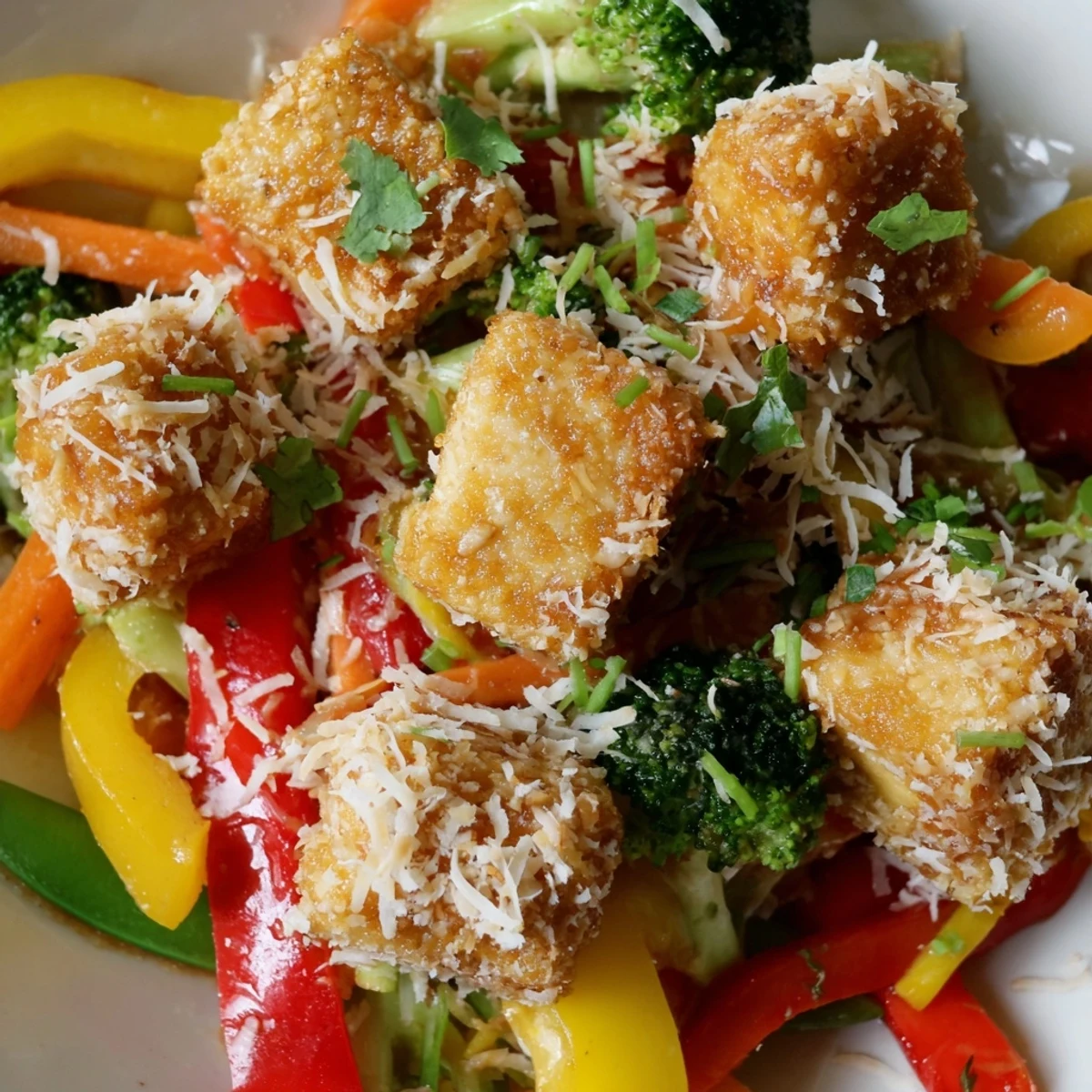
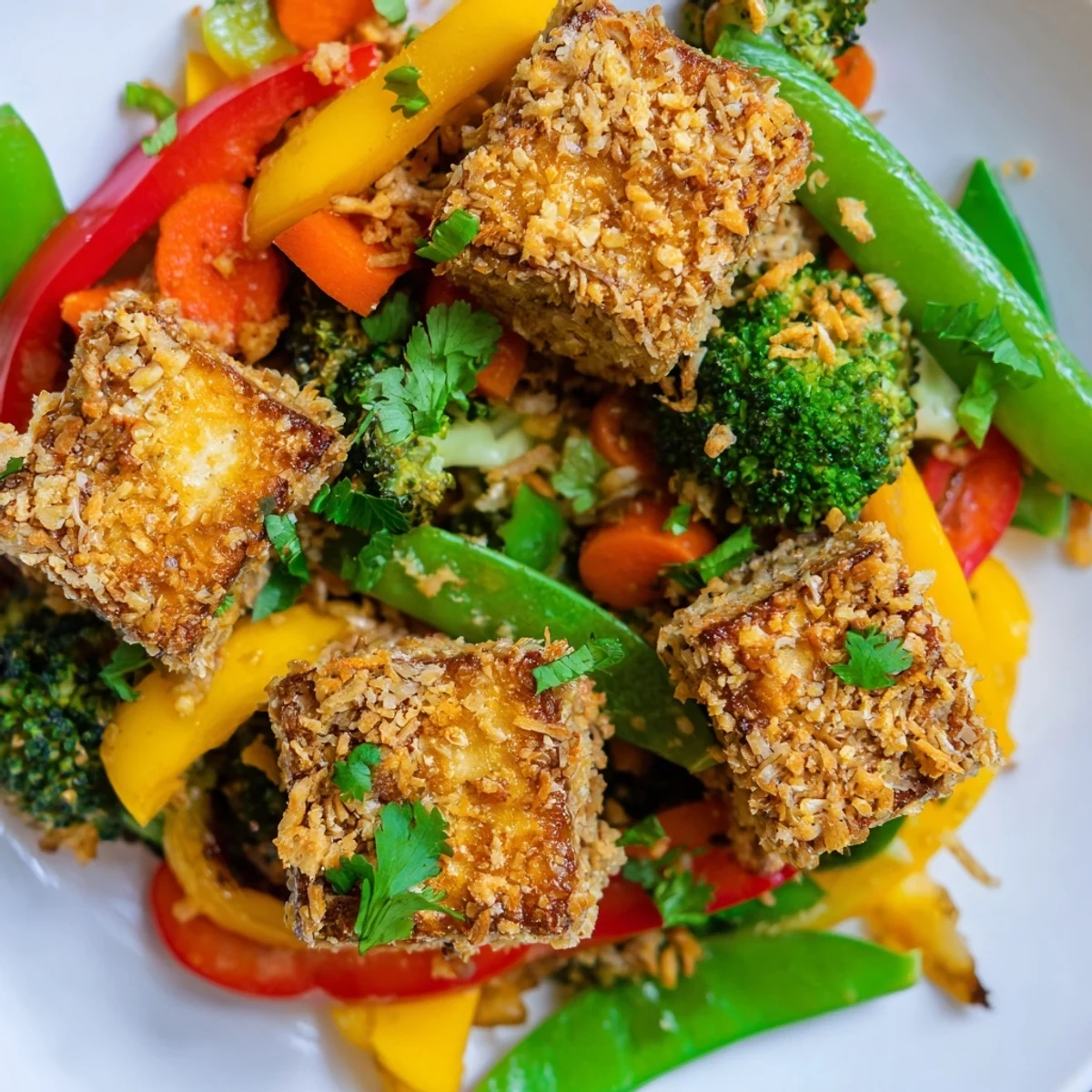
 This dish features golden, crispy tofu coated in shredded coconut and panko breadcrumbs, pan-fried to perfection. Paired with colorful stir-fried vegetables like bell peppers, broccoli, carrots, and sugar snap peas tossed in a tangy soy-ginger sauce, it offers a plant-based main packed with texture and bold flavors. Ready in just 45 minutes, it’s an easy, satisfying meal that can be served with steamed jasmine or brown rice and garnished with fresh cilantro and lime wedges.
My first attempt at crispy coconut tofu happened on a Tuesday when I was determined to prove that plant-based cooking could be just as satisfying as anything else. The moment those golden cubes hit the hot oil, filling the kitchen with that nutty, toasted coconut aroma, I knew I'd stumbled onto something special. What started as an experiment became the dish I now make whenever I want to feel genuinely excited about dinner. There's something about that textural contrast—the crispy outside giving way to creamy tofu within—that keeps people asking for seconds.
I made this for my sister's dinner party last spring, and I watched her take that first bite with visible skepticism—she's always been a meat-and-potatoes person. By the third piece of tofu, she was asking if I'd share the recipe. That's when I realized this dish wasn't about proving anything to anyone; it was just genuinely delicious, and that speaks louder than any argument ever could.
Ingredients
- Extra-firm tofu (400 g): The foundation of everything—press it well to drive out moisture, which is what lets it get crispy instead of steamed. I learned this the hard way after my first batch turned out soggy.
- Cornstarch (3 tbsp): This creates that delicate, crispy shell you're after; it's gentler than flour and crisps up beautifully in the coconut coating.
- Shredded coconut and panko (½ cup each): Together they create the signature golden texture that makes every bite interesting, with the panko adding crunch and the coconut bringing its own subtle sweetness.
- Coconut milk (3 tbsp): Acts as your binder, helping the coating stick to the tofu; use full-fat for richness and better adhesion.
- Vegetable oil (2 tbsp for frying, 2 tbsp for vegetables): Keep it separate so your frying oil doesn't get veggie debris in it and lose its crispness.
- Bell peppers, broccoli, carrot, snap peas: Pick whatever speaks to you that day—these are guidelines, not gospel, and fresh is always better than frozen for texture.
- Soy sauce, rice vinegar, maple syrup, ginger, garlic, sesame oil: This sauce is the whole story coming together; don't skip the sesame oil because it's what makes everything taste complete.
Instructions
- Press the tofu until it actually feels dry:
- Cut your block into cubes and wrap it in clean cloth or paper towels, then weight it down with something heavy—a cast iron skillet works perfectly. I give mine at least 15 minutes, sometimes longer, because this step determines everything that follows.
- Set up your breading station like an assembly line:
- Three shallow bowls in order: cornstarch mixture, coconut milk, and the coconut-panko blend. This rhythm makes the whole process meditative and ensures even coating.
- Coat each cube with intention:
- Dredge in cornstarch first, shake off excess, dip briefly in coconut milk so it's just moistened, then roll in coconut-panko until fully covered. You're creating a jacket here, not drowning the tofu.
- Fry until golden and genuinely crispy:
- Heat oil to medium (not smoking, but shimmering) and work in batches so the pan stays at temperature. Listen for that satisfying sizzle when each piece hits the oil, and give each side its full 2–3 minutes without moving them around—that's how you get the crust to develop.
- Get the vegetables moving while the tofu rests:
- Heat your wok or large skillet until it's almost smoking, then add the harder vegetables first (carrots, broccoli) so everything finishes tender-crisp together. The high heat keeps colors vibrant and textures snappy.
- Build the sauce and bring it all together:
- Whisk your sauce components while the vegetables cook, pour it in when everything's just-done, and toss gently to coat. The sesame oil blooms in the heat, and that's when the whole dish truly comes alive.
 Save to Pinterest
 There was a moment during that dinner party when everyone was eating, really eating, not just picking at something unfamiliar, when my sister looked up and said, 'This is what you eat?' That simple question made me realize that good food is its own language, and this dish speaks it fluently. It's become something I make not to prove a point, but because it genuinely makes people happy.
Why the Coconut Crust Works
Coconut has this magical property in cooking—it's rich without being heavy, and it crisps up in a way that feels almost indulgent. The panko amplifies that effect, creating layers of texture instead of one solid crust. What I discovered through trial and error is that the combination of coconut milk as a binder and the coconut-panko blend as coating creates something that's crispy outside but doesn't overwhelm the mild tofu inside. The tofu becomes a canvas rather than trying to compete for attention.
Building the Perfect Stir-Fry
Stir-frying isn't complicated, but it does demand your attention and a hot pan. I used to throw everything in at once and wonder why it turned out watery and limp. Now I understand it's about timing and temperature—the vegetables should sizzle the moment they hit the oil, which means your wok needs to be properly heated and you need to keep moving. The sauce goes in last, just a minute before serving, so it coats everything instead of sitting there and softening the vegetables. It's the difference between stir-fried and stewed, and that difference tastes significant.
Serving Suggestions and Flavor Pairings
Rice is the obvious companion, and for good reason—it soaks up the sauce and turns a side into a supporting player in the main event. But I've also served this over quinoa, with crusty bread on the side, or over greens for something lighter. The cilantro and lime aren't afterthoughts; they brighten everything and add a freshness that grounds the richness of the coconut. One unexpected pairing I discovered is serving it at room temperature the next day as a salad base, which changes the entire character while keeping all the flavor.
- Fresh cilantro and lime wedges are essential, not optional—they transform the whole dish.
- Rice should be warm and freshly steamed, not cold from the fridge.
- This keeps well in the refrigerator for three days and actually develops more flavor as it sits.
 Save to Pinterest
 This is the kind of dish that becomes part of your regular rotation because it satisfies something real—not just hunger, but the desire for flavor and texture and something that tastes genuinely cared for. Every time you make it, you'll find small ways to tweak it that make it yours.
Recipe FAQs
- → How do I achieve a crispy coating on the tofu?
-
Press the tofu to remove excess moisture, then coat it in cornstarch, dip in coconut milk, and finally cover with a mix of shredded coconut and panko before frying in hot oil until golden and crisp.
- → Can I customize the stir-fried vegetables?
-
Yes, you can swap or add vegetables like mushrooms, baby corn, or zucchini to suit your taste and seasonal availability.
- → What sauce ingredients create the tangy flavor?
-
The sauce combines soy sauce, rice vinegar, maple syrup, fresh ginger, garlic, and toasted sesame oil for a balanced tangy and slightly sweet flavor.
- → Is this suitable for a gluten-free diet?
-
Use gluten-free panko and tamari instead of regular breadcrumbs and soy sauce to keep the dish gluten-free.
- → What are some suggested serving options?
-
Serve with steamed jasmine or brown rice, and garnish with fresh cilantro and lime wedges for added freshness and brightness.