
 Save to Pinterest
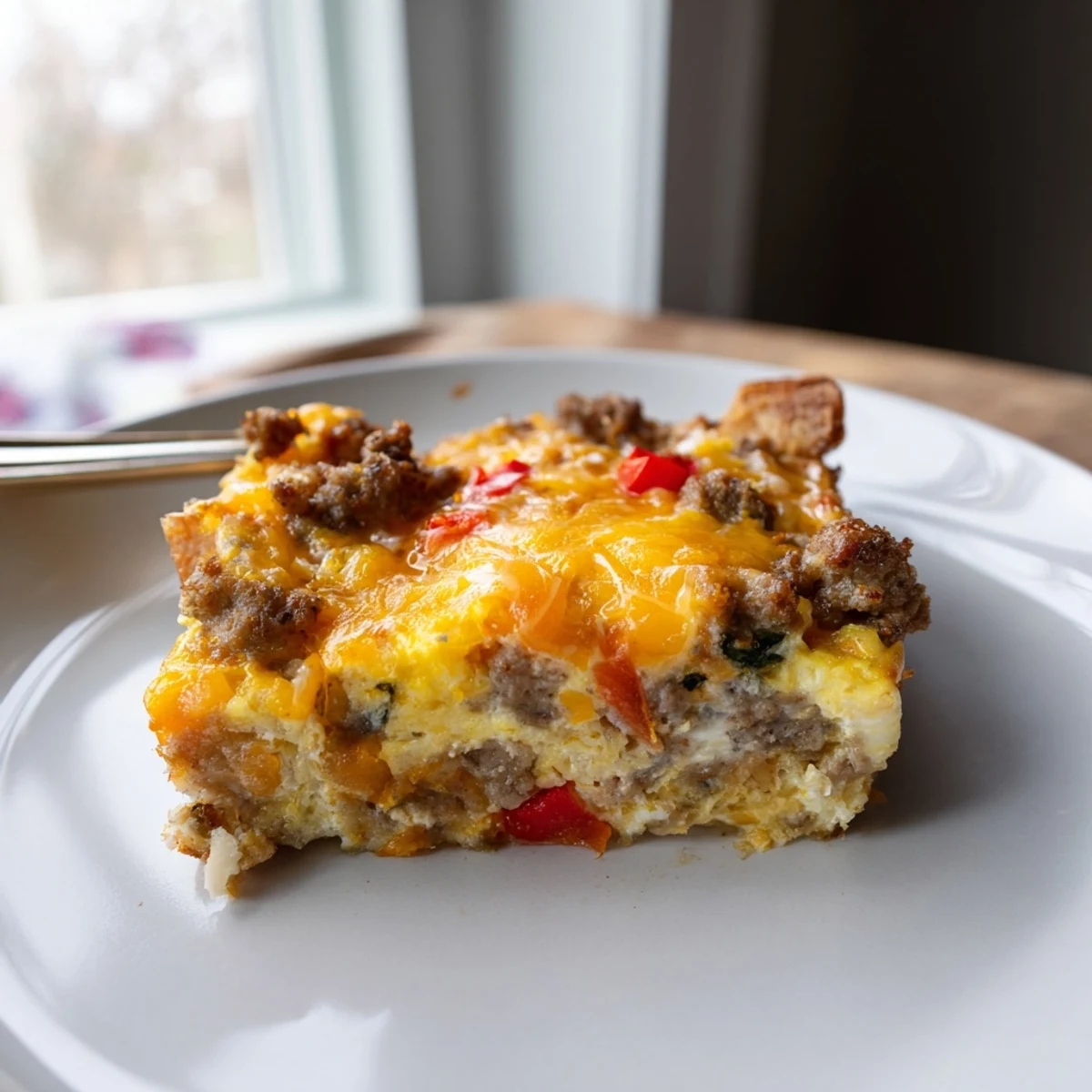
 This winter brunch casserole combines savory breakfast sausage, sautéed onions, bell peppers, and baby spinach layered with bread cubes and a rich blend of eggs, milk, cream, and sharp cheddar and mozzarella cheeses. After assembling the layers and soaking the bread in the seasoned egg mixture, the casserole is chilled and baked until golden and set. The result is a comforting and hearty dish ideal for warming cold mornings.
Variations include swapping the sausage for turkey or vegetarian options and exchanging spinach for kale or mushrooms. Pair with fresh fruit salad or a sparkling drink for a complete meal.
My sister called on a Sunday morning, asking if I could bring breakfast for eight people by noon. I had eggs, half a loaf of sourdough going stale, and some sausage in the freezer. That's when I remembered my neighbor's trick: layer everything the night before, let it all get cozy together, and just pop it in the oven. This casserole saved that brunch, and now it's my answer to every winter gathering that needs warmth on a plate.
I made this for a group of ski friends who'd been out all morning in below-freezing weather. When they came in stamping snow everywhere, laughing and half-frozen, I pulled this golden, bubbling casserole from the oven. The smell hit them before they even took off their jackets, and watching them dig in with that grateful silence—that's when I knew this recipe was a keeper.
Ingredients
- Breakfast sausage, 450 g (1 lb), casings removed: This is the backbone of the whole dish—the fat renders into the casserole and seasons everything beautifully, so don't skip it or swap it out for pre-cooked links.
- Onion and red bell pepper: Diced medium so they soften evenly and don't overpower the eggs; red pepper adds sweetness that plays against the savory sausage.
- Baby spinach, 150 g (1 cup), roughly chopped: It wilts down to almost nothing but brings earthy depth and color that makes this feel less heavy than it is.
- Eggs, 8 large: The custard base—use room-temperature eggs if you can, they whisk smoother and cook more evenly.
- Whole milk and heavy cream, 240 ml (1 cup) and 120 ml (½ cup): The cream is what makes this silky instead of rubbery; don't use all milk thinking you're being virtuous.
- Sharp cheddar cheese, 200 g (2 cups), shredded, divided: Sharp has the flavor to stand up to the sausage and eggs without getting lost; mild cheddar disappears.
- Mozzarella, 80 g (¾ cup), shredded: This pulls everything together into a melt, while cheddar does the heavy lifting flavor-wise.
- Day-old bread, 250 g (5 cups), cubed: Stale bread is essential—fresh bread turns to mush; sourdough or country loaf adds character that sandwich bread never could.
- Salt, black pepper, garlic powder, dried thyme: Keep the seasonings moderate since the sausage and cheese bring their own salt; thyme ties the whole thing together with a gentle herbaceous note.
Instructions
- Heat the oven and prep the dish:
- Set your oven to 180°C (350°F) and butter a 23x33 cm (9x13 inch) baking dish thoroughly so nothing sticks to the bottom. This is a medium heat, not screaming hot, which means the eggs will cook through gently without the edges drying out.
- Brown the sausage:
- In a large skillet over medium heat, crumble the sausage with a wooden spoon as it cooks, about 6–8 minutes, until it's no longer pink and the fat is rendering out. Leave about 1 tablespoon of that fat behind when you transfer it to a plate—that's liquid gold for the vegetables.
- Sauté the vegetables:
- Toss the onion and bell pepper into the same skillet with that reserved sausage fat, and let them soften for 4–5 minutes until the onion turns translucent. Stir in the spinach and watch it collapse into the pan in about a minute, then turn off the heat.
- Make the custard:
- In a large bowl, whisk the eggs, milk, and cream together until they're completely combined, then add salt, pepper, garlic powder, and thyme. Whisking it this way distributes the seasonings evenly so no bite feels underseasoned.
- Layer the casserole:
- Spread half the bread cubes across the bottom of the baking dish, then scatter half the sausage over that, half the vegetable mixture, and half the combined cheeses. Repeat with the remaining bread, sausage, vegetables, and cheeses, building layers like you're making a savory bread pudding.
- Pour and soak:
- Pour the egg mixture slowly and evenly over the whole thing, then press down gently with a spatula so the bread actually soaks up the liquid and doesn't just float on top. You want a cohesive casserole, not bread swimming in custard.
- Chill overnight or for at least 30 minutes:
- Cover with foil and refrigerate—this rest time is when the bread truly absorbs all that eggy goodness and the flavors meld together. Overnight is best if you have time.
- Bake covered, then uncovered:
- Bake covered with foil for 30 minutes so the eggs set gently without the top drying out, then remove the foil and bake another 20 minutes until the center is set and the top is golden and slightly crispy. A toothpick inserted in the center should come out clean with no runny custard.
- Rest before serving:
- Let it sit for 10 minutes out of the oven—this lets the casserole firm up just enough to slice cleanly without everything falling apart on the plate.
 Save to Pinterest
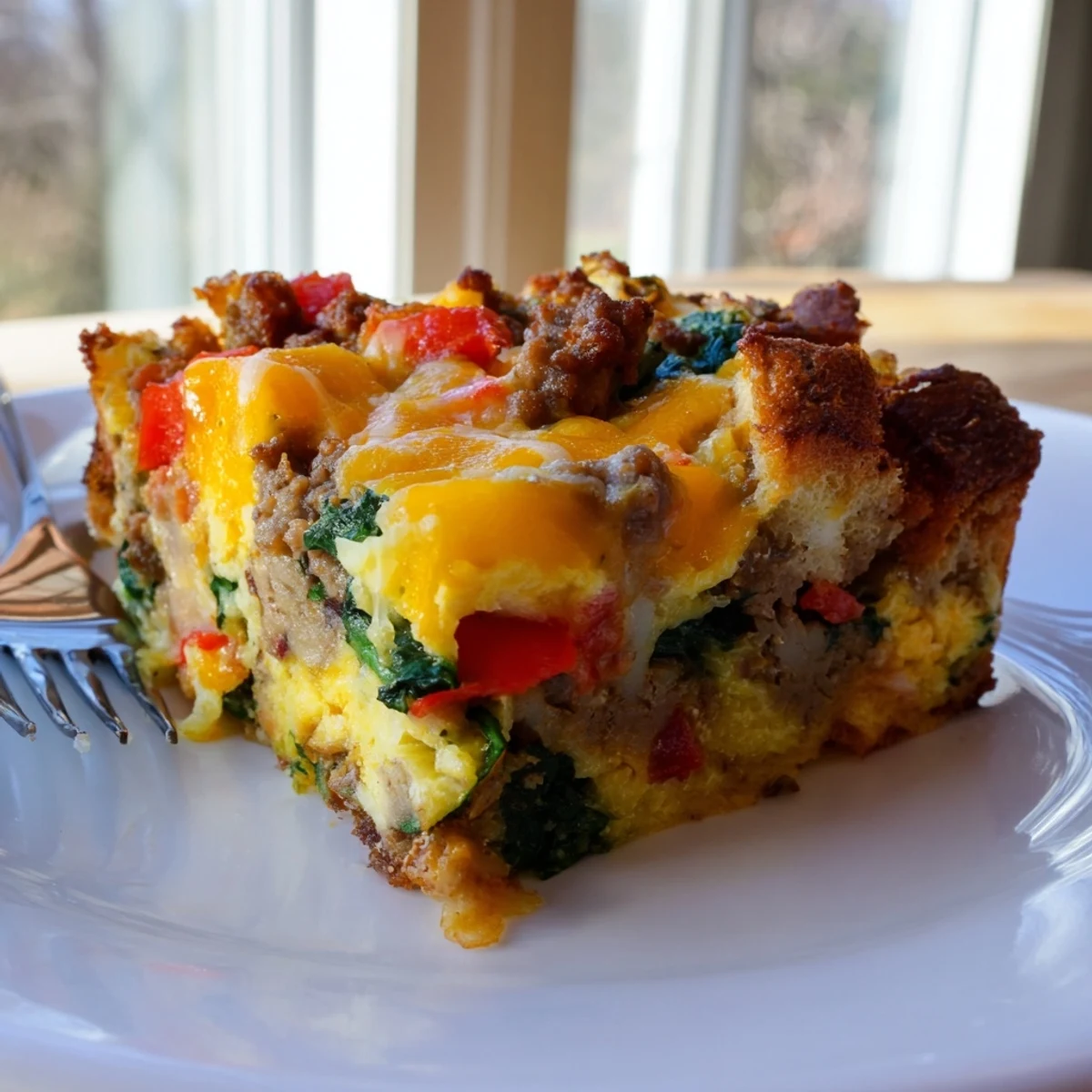
 There's something about pulling a casserole like this from the oven on a cold morning—that moment when steam rises and the whole kitchen smells like eggs, sausage, and melted cheese—it stops everyone mid-conversation. Suddenly breakfast isn't just fuel; it's an event.
Make-Ahead Magic
This casserole was practically designed for people who'd rather sleep in than wake up early to cook. Assemble it completely the night before, cover it with foil, and slide it straight into the oven while you shower and make coffee. I've made this at my family's cabin more times than I can count because it removes all the stress from feeding a crowd, and somehow that ease translates into a better meal.
Mix-Ins and Swaps
One winter I tried mushrooms instead of spinach because that's what was in the crisper drawer, and the earthiness was even better than my original version. Turkey sausage works if you prefer something lighter, though you'll lose some of that richness. Kale, zucchini, sun-dried tomatoes, roasted broccoli—the framework is flexible enough to use whatever you have or whatever you're craving.
Serving and Pairing Ideas
Serve this alongside a bright green salad dressed with lemon and olive oil, or with fresh fruit that cuts through the richness—berries, citrus, anything crisp. A glass of sparkling wine or fresh juice feels celebratory without being fussy. This dish is the kind that makes you feel like you've hosted a proper meal without having spent your whole morning in the kitchen.
- Cut it into squares while it's still warm and they'll hold their shape beautifully on the plate.
- Leftover slices reheat perfectly in a 160°C (325°F) oven for about 15 minutes—better than it has any right to be the next day.
- Double the recipe if you're feeding more than eight; it scales up with no complications.
 Save to Pinterest
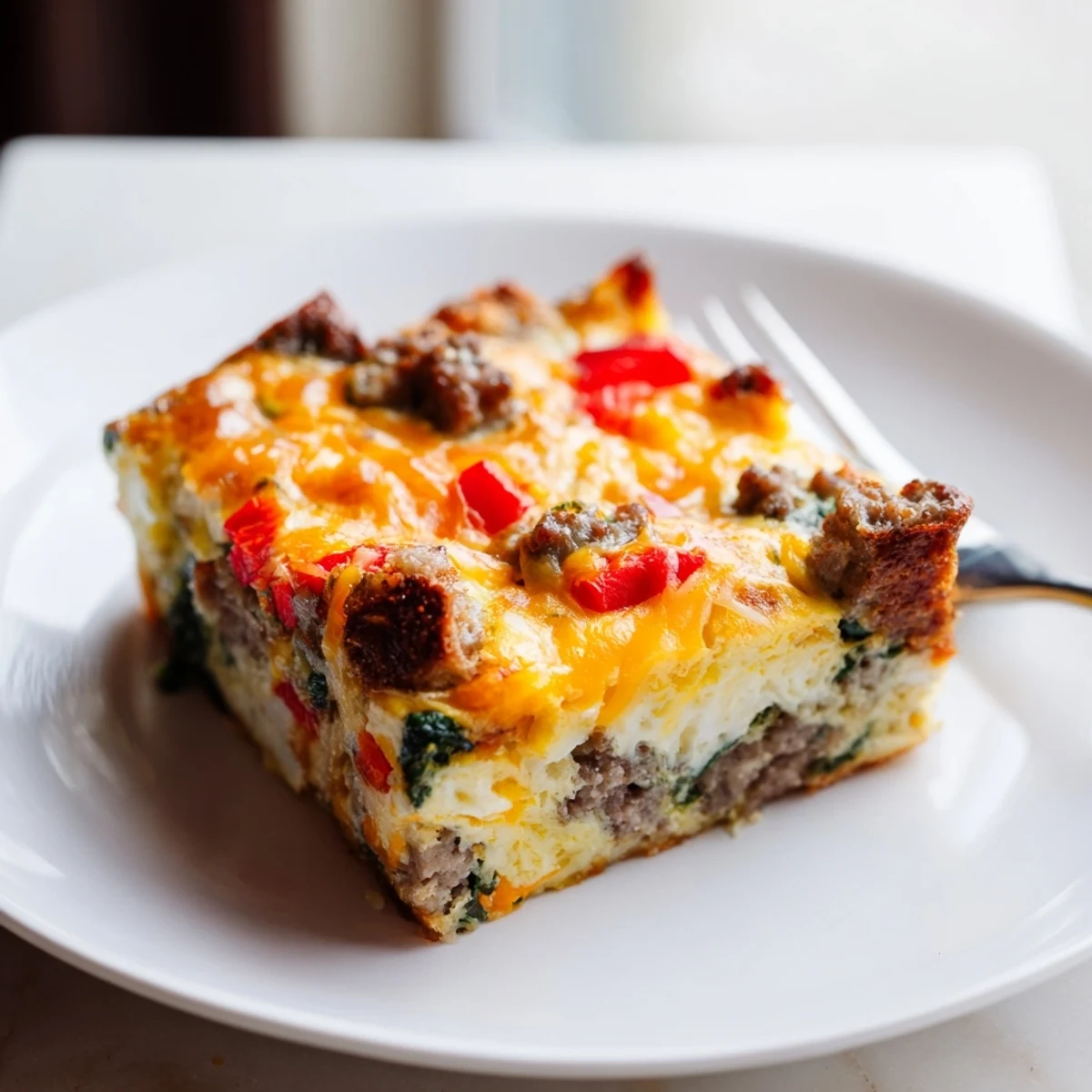
 This casserole has become my winter answer to almost every invitation, and I've never regretted bringing it. It feeds a crowd, tastes better than it looks, and lets you actually enjoy your guests instead of being stuck at the stove.
Recipe FAQs
- → Can I use a different sausage in this dish?
-
Yes, turkey or vegetarian sausage can be used to adjust the flavor or dietary preference while maintaining the dish's heartiness.
- → How long should the casserole rest before serving?
-
Allow the casserole to rest for about 10 minutes after baking; this helps it set and makes slicing easier.
- → Is it possible to prepare this casserole in advance?
-
Absolutely. You can assemble the casserole and refrigerate it overnight before baking, which enhances the flavors.
- → What breads work best for this layered dish?
-
Day-old sourdough, country loaf, or any sturdy bread cubes absorb the egg mixture well without becoming too mushy.
- → Can I substitute vegetables in the casserole?
-
Yes, mushrooms or kale can replace the spinach, and different peppers or onions may be used based on preference.