
 Save to Pinterest
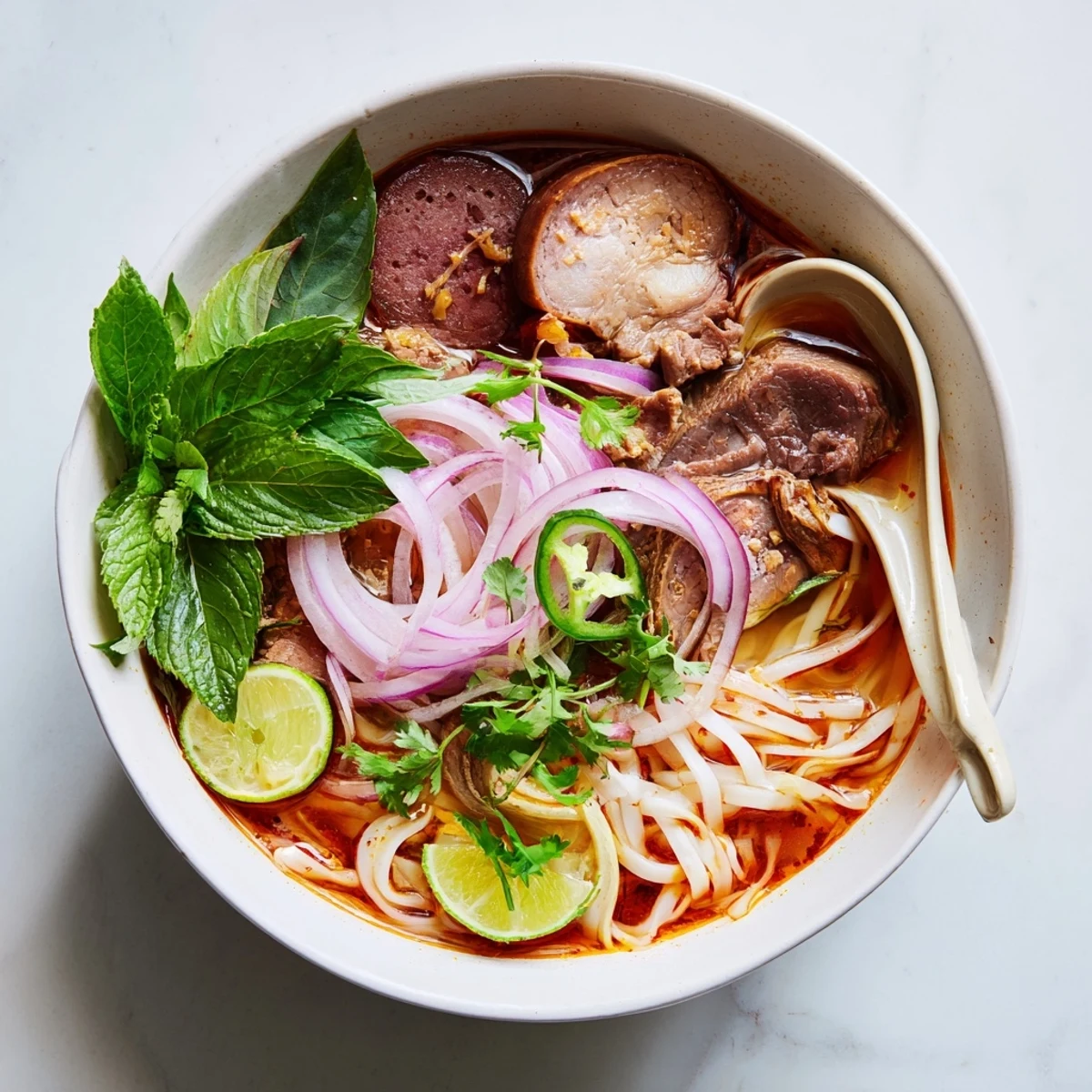
 Bun Bo Hue brings the vibrant cuisine of central Vietnam to your kitchen with its signature spicy, lemongrass-infused broth. This beloved dish features tender beef shank and pork hock simmered for hours with aromatics like ginger, garlic, and shrimp paste, creating a deeply flavorful base. The thick round rice noodles, characteristic of this regional specialty, provide the perfect canvas for the aromatic chili oil drizzled over each bowl. Fresh herbs, bean sprouts, and lime wedges add bright contrasts to the rich, warming broth, making this a complete and satisfying meal that showcases the complex flavors of Vietnamese cooking.
The first time I encountered Bun Bo Hue was at a tiny family-run spot in Saigon where the auntie warned me about the heat, then laughed when I reached for the chili jar anyway. That bowl changed everything I thought I knew about Vietnamese soup, the broth hitting with this incredible lemongrass punch that cleared my sinuses and made my eyes water in the best possible way. Now my apartment smells like simmering beef and toasted chilies for hours whenever I make it, and my neighbors definitely judge me for it.
Last winter I made this for friends who swore they couldn't handle spicy food, and within ten minutes everyone was silently slurping with sweat on their foreheads, reaching for more water but refusing to stop eating. One friend actually asked if I could bottle the broth, which I took as the highest compliment imaginable.
Ingredients
- Beef shank (bone-in): The bone is non-negotiable here, it's what gives the broth that rich body and deep beef flavor
- Pork hock: Adds a different kind of richness and collagen that makes the broth feel luxurious
- Lemongrass: Bruise it hard with the back of your knife to release those aromatic oils, this is the signature flavor
- Shrimp paste (mam ruoc): Don't be scared of the smell, it transforms into something incredible in the broth
- Annatto seeds: Totally optional, but they give the broth that gorgeous red-orange color that makes it look authentic
- Thick rice noodles: Regular vermicelli noodles won't work here, you need the substantial round noodles that can hold up to the bold broth
- Fresh herbs: The more the better, they cut through the richness and brighten every single bowl
Instructions
- Blanch the meats first:
- This step feels annoying but it makes the clearest broth, so commit to the rinse and don't skip it
- Build the broth base:
- Smash your aromatics well before adding them, and let everything come to temperature together so the flavors marry properly
- Simmer low and slow:
- Keep the bubbles gentle, you want to extract flavor without making the broth cloudy or reducing it too much
- Make the chili oil while broth simmers:
- The annatto infusion turns the oil this incredible red color, and frying the aromatics in it concentrates all that flavor
- Prep all your proteins while you wait:
- Slice everything thin and have it ready, because once that broth is done, you want to eat immediately
- Assemble like you mean it:
- Layer the noodles first, then arrange the meats so they look generous, ladle hot broth over everything and watch the steam rise
- Garnish aggressively:
- Don't be shy with herbs, sprouts, and lime, they're not just decoration, they're essential balance
 Save to Pinterest
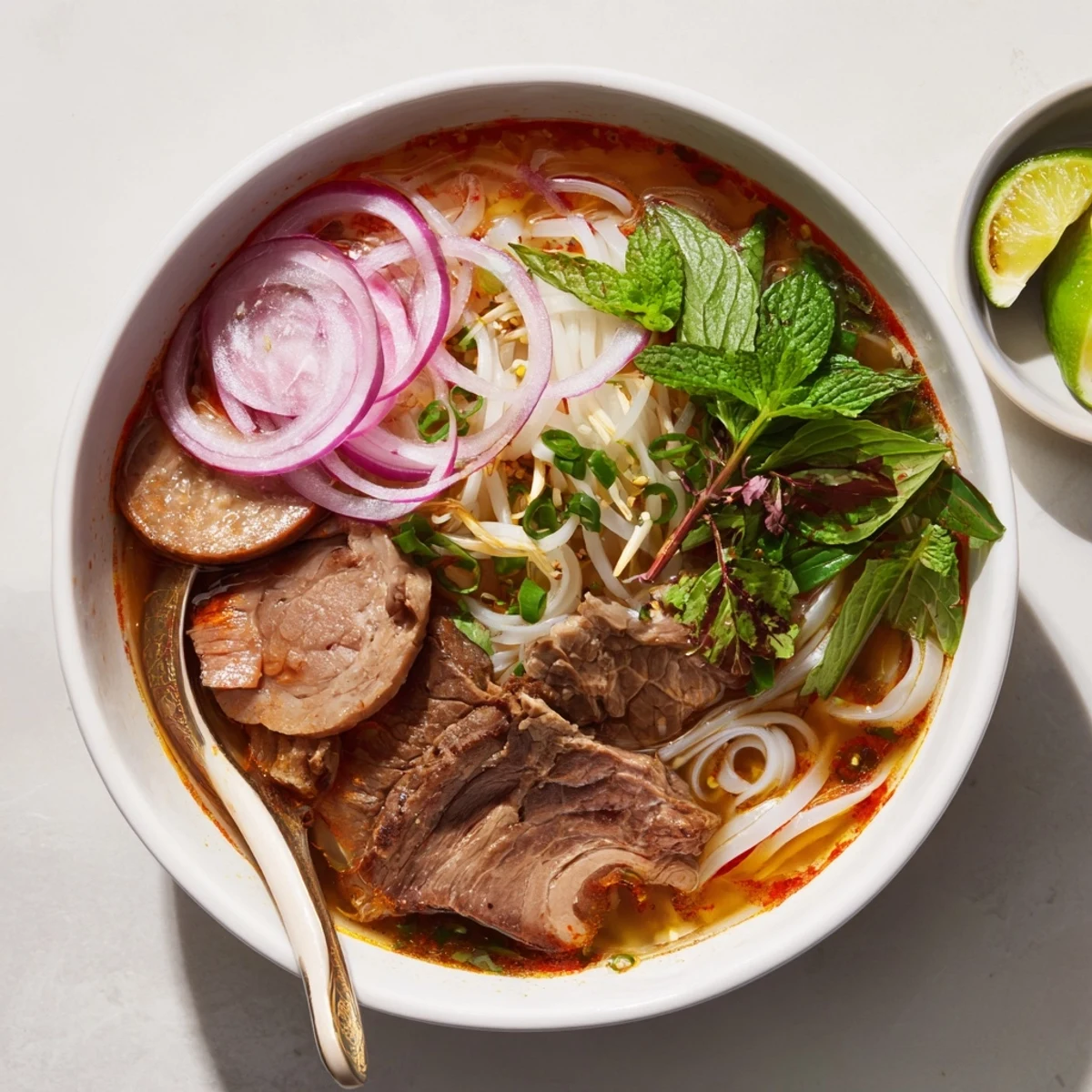
 My dad tried to tell me he could handle the heat level I make for myself, then spent the entire meal dramatically fanning his mouth and drinking milk straight from the carton. Now I always serve the chili oil on the side and let people self-destruct at their own pace.
The Secret To Clear Broth
Blanching the meat first removes all those impurities that would otherwise cloud your broth during the long simmer. It adds five minutes to your prep time but the difference is literally visible.
Making It Ahead
The broth actually tastes better the next day, so I always make it the day before serving and refrigerate overnight. The fat solidifies on top, making it easy to skim off if you want something lighter.
Noodle Timing
Overcooked noodles are tragic, especially with something this special. Cook them separately until just tender, rinse immediately with cold water to stop cooking, and only add them to bowls right before serving. This way they maintain their chew and don't turn into mush.
- Never cook noodles in the broth, it makes everything cloudy and starchy
- Undercook slightly since hot broth will soften them further in the bowl
- Have serving bowls ready before you start the noodles so timing is perfect
 Save to Pinterest
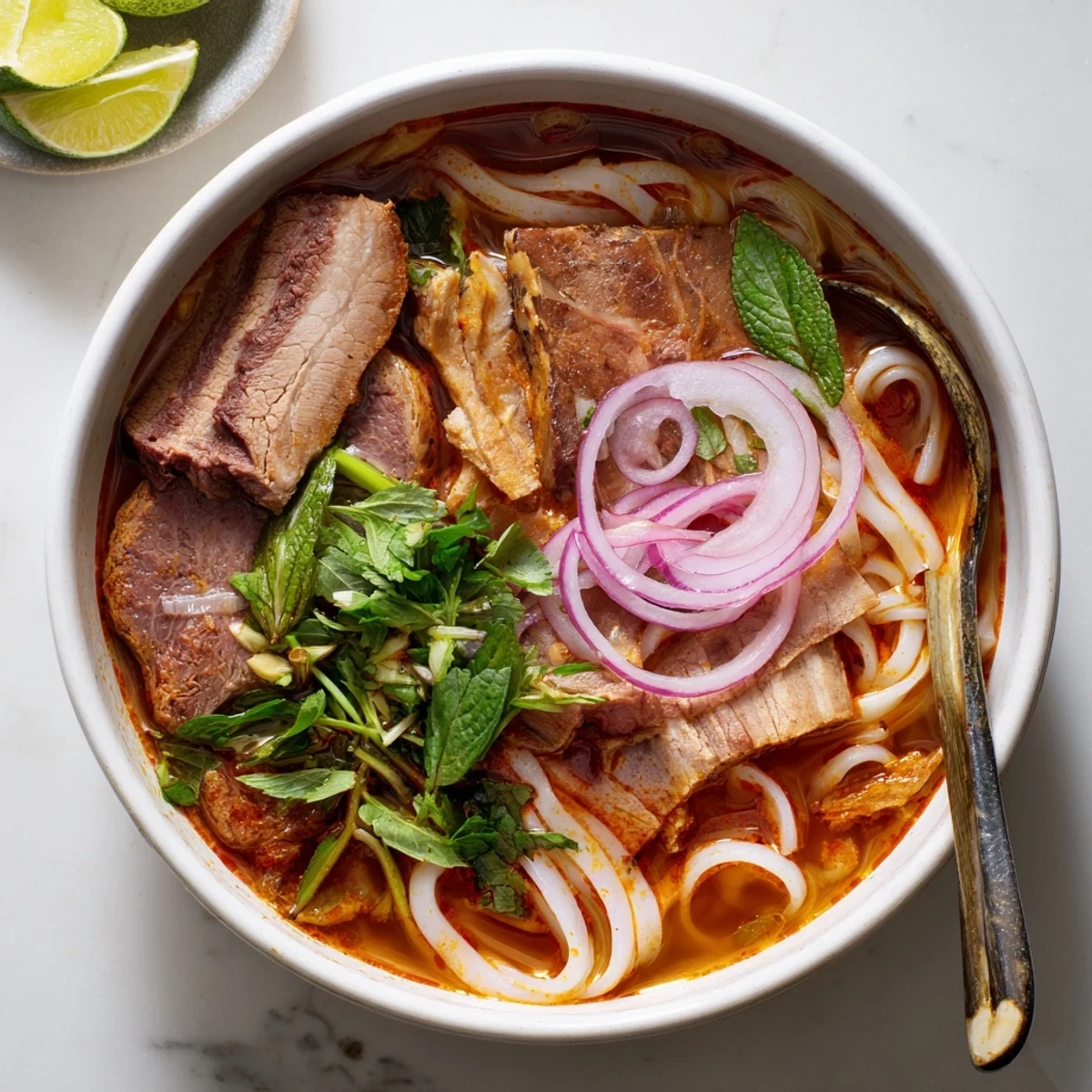
 This recipe deserves patience and attention, but the first time you taste that broth, you'll understand why people spend hours making it. Good things come to those who simmer.
Recipe FAQs
- → What makes Bun Bo Hue different from pho?
-
Bun Bo Hue originates from central Vietnam and features a spicier, more complex broth with lemongrass and shrimp paste. The noodles are thicker and rounder than pho's flat rice noodles, and the dish typically includes various meats like beef shank, pork hock, and sometimes pork blood cubes.
- → Can I make this less spicy?
-
Absolutely. Adjust the amount of chili oil and fresh chili slices to your preference. The aromatic base will still deliver incredible flavor even with reduced heat. You can also serve chili oil on the side for diners to add individually.
- → What can I substitute for shrimp paste?
-
While shrimp paste (mam ruoc) provides authentic depth, you can use additional fish sauce or a small amount of miso paste as an alternative. The flavor profile will shift slightly but remain delicious.
- → Is the pork blood essential?
-
Pork blood cubes are traditional but completely optional. Many home cooks and restaurants skip them, and the dish remains authentic and satisfying without this ingredient.
- → Can I shorten the cooking time?
-
The long simmer develops the broth's depth, but you can reduce it to 90 minutes using beef brisket instead of shank. The flavor won't be as rich, but it will still be enjoyable for a quicker weeknight meal.